
- September 22, 2026
- Mark Mills
There comes a point in building a window treatment business when the questions get harder.
Early on, many decisions are relatively tactical. Which vendors will you work with? Which products will you carry? How will you price an installation? What software will you use?
As the business grows, the stakes change. You may be deciding whether you can afford another employee, how to compensate someone you cannot afford to lose, whether it is time to raise your prices, whether a new salesperson will create growth or simply add overhead, or whether an opportunity that looks exciting will actually make the business more profitable.
Eventually, you may face even bigger questions: Should you acquire another business? Open another location? Step out of sales? Bring a family member into the company? Create a succession plan? Sell the business?
There is rarely one universally correct answer to questions like these. The answer depends on your numbers, business model, employees, market, goals, appetite for risk and what you ultimately want the business to provide for you.
Yet you try to answer them with some combination of instinct, internet research and whatever advice happens to be available.
There is a better way to make an important business decision: put better information and better people around it.
More Information Hasn’t Made Business Decisions Easier
You have access to more information than ever. Between Google, podcasts, YouTube, industry groups, software platforms and AI, you can research almost any business question in minutes.
That is a tremendous advantage when you use these tools for what they do well.
AI, for example, can help you develop a job description, organize an SOP, compare compensation structures, brainstorm marketing ideas, identify questions you should be asking or work through several possible approaches to a problem.
But information has a limitation that becomes increasingly important as the stakes rise: it doesn’t know what happened when someone like you actually made the decision.
Suppose you’re considering hiring your first salesperson.
You can research compensation plans, write a job description and build an onboarding checklist. Those are useful steps, but they don’t answer some of the questions most likely to determine whether the hire succeeds:
What revenue level were other owners at when they hired their first salesperson? What responsibilities did they have to get off the owner’s plate first? How long did it take for the salesperson to become productive? What did the owner underestimate about training and management? What compensation structure worked? What would they do differently if they were making the hire again?
Those answers require experience and context.
The same is true when you’re trying to determine whether your gross margin is healthy, whether your payroll is too high, whether you should add a showroom, how much to spend on marketing or how to retain a valuable employee.
A generic answer can give you a starting point. A conversation with someone who understands your type of business can help you determine whether that answer makes sense for your business.
Good CEOs Don’t Need to Know Everything
You may feel that because you’re the one responsible for the business, you’re supposed to already know the answer.
That can make business ownership unnecessarily isolating.
Your employee wants a raise. Your salesperson isn’t producing. Your margins have slipped. A competitor wants to sell you their company. Your marketing company wants another $3,000 a month. Your best employee is being recruited by someone else.
Everyone looks to you.
That doesn’t mean you should make the decision without input.
A CEO’s job isn’t to have every answer. It’s to make good decisions with the best information available.
That requires knowing when the decision is significant enough to seek perspective before acting. One useful rule is to look at three things: cost, reversibility and experience.
If getting a decision wrong could cost significant money, customers, employees or owner time, slow down.
If the decision will be difficult or expensive to reverse, slow down. And if you’re dealing with something you’ve never experienced before, find someone who has.
Hiring a key employee, changing compensation, signing a lease, adding a location, acquiring a company or restructuring the owner’s role all pass that test. You still make the final call, but there is little advantage in learning every expensive lesson firsthand.
Ask People Who Understand the Business You’re Actually Running
Getting advice isn’t difficult. Getting relevant advice is.
A window treatment company isn’t simply a generic small business.
A $300,000 owner-operated shop-at-home business faces different questions than a $3 million managed retail operation. A workroom managing fabrication employees has different labor and capacity concerns than a solo owner using subcontractors. An owner who wants to remain personally involved in sales should not necessarily build the same company as an owner whose goal is to manage a team.
This is why context matters so much.
Before taking business advice seriously, ask:
- Has this person dealt with a business like mine?
- Do they understand the economics behind the decision, or only the theory?
- Can they tell me what happened after they implemented their recommendation?
- Are they willing to talk about what didn’t work as openly as what did?
- Do they understand what I’m trying to accomplish personally, not simply how to make the company bigger?
That last question is particularly important.
Growth is not automatically the right answer. One owner may want to build a multi-location managed company. Another may want a highly profitable home-based business with an assistant and dependable installer. One may want more employees; another may want fewer headaches.
At Exciting Windows, our mission isn’t simply to help you build larger businesses. It’s to help them build businesses that are profitable, pleasurable and valuable. That requires understanding what success actually means to the individual owner.
The Most Useful Business Conversation Often Starts With “Has Anyone Else Done This?”
One of the advantages of being around other owners is discovering that a decision that feels entirely new to you isn’t new to everyone.
Exciting Windows members Ashley and Ryan Engdahl experienced this when they were struggling with an employee who wasn’t the right fit. They already sensed what needed to happen, but making the decision was difficult. A conversation with Vin Nigara helped them work through it and trust their judgment.
What happened afterward is even more instructive. They continued strengthening their systems, training and team until they reached a point where they could leave for a family vacation, disconnect from the business and return to find that their team had handled customers and operations successfully.
The lesson isn’t that another person should make your employee decisions for you. It’s that an experienced perspective can help you see a difficult decision more clearly—and that the real objective may be larger than solving today’s problem. In Ashley and Ryan’s case, the larger objective was building a business that could function without requiring their constant presence.
Rae Hoffman faced a completely different situation when an opportunity arose to acquire another window treatment business. She had never purchased a company before. Instead of trying to invent an acquisition strategy herself, she was able to turn to people within Exciting Windows who had relevant experience and could help her think through the structure and negotiation.
Oliver Schreiber encountered another familiar owner dilemma when he wanted to retain an employee who had become extremely important to his company. Determining what to offer involved more than looking up a salary range. Conversations with Vin and other Exciting Windows members gave Oliver additional perspective as he worked through the compensation decision.
Three different problems. In each case, the owner remained responsible for the decision. What changed was the quality of the perspective available before making it.
Don’t Just Ask for an Answer. Ask Better Questions.
This is where peer advice can go wrong, too.
If you walk into a room of business owners and ask, “Should I hire a salesperson?” you’ll probably get plenty of opinions.
A better conversation starts with your facts.
Instead, bring your current revenue, gross margin, number of appointments, close rate, average customer sale, existing payroll, your own sales volume and the specific problem you’re trying to solve by hiring.
Then ask another window treatment business owner who has done it:
- What did your numbers look like before you hired?
- What changed financially after the hire?
- What did you have to teach or document before the person could succeed?
- What management responsibility did you underestimate?
- How long did it take before you knew the decision was working?
- What would you want to know if you were in my position?
Now you’re not collecting opinions. You’re gathering experience you can use.
This is one reason transparency matters so much inside Exciting Windows. Members discuss real business information, including gross sales, gross margins, employee and owner compensation, operating expenses, sales goals, vendor discounts and marketing ROI.
A conversation about improving profit changes considerably when another owner is willing to say, “Here’s my number. Here’s what yours is. Here’s what I changed.”
Build a Personal Board of Advisors Before You Need One
You don’t need a formal board of directors to benefit from this approach.
You should be able to identify a small group of people they can call for different types of decisions: someone strong in finance and profitability, someone who has built and managed a team, someone who understands sales, someone who knows marketing, and ideally one or two owners whose businesses are a few steps ahead of where they want theirs to go.
Don’t wait until a crisis to develop those relationships.
Share numbers. Ask questions when things are going well. Learn how other businesses operate. Offer your own experience when you can help someone else. Over time, those conversations create something an internet search cannot: context about you, your business and what you’re trying to accomplish.
This is a fundamental part of how Exciting Windows works. Our partners help members understand what to do, while members openly share how they’ve approached similar challenges in their own businesses.
Sometimes you’re the owner asking for help. Six months later, you may be the person who has already solved the problem someone else brings to the group.
That’s how a valuable business community should work.
Before Your Next Big Decision, Do This
The next time you’re facing a consequential decision, don’t begin by asking, “What should I do?”
Start by writing down five things:
- The decision: What exactly are you deciding?
- The objective: What business problem are you trying to solve?
- The numbers: What facts should influence the decision?
- The trade-offs: What do you gain, risk or give up with each option?
- The experience gap: Who has already done something similar and can tell you what they learned?
Then have the conversation.
You may leave with confirmation that your original instinct was right. You may discover an option you hadn’t considered. Or someone may ask one question that exposes a problem in your thinking.
All three outcomes are valuable.
Who Is in the Room When You Plan 2027?
The final months of the year bring decisions about next year: employees, budgets, pricing, marketing, sales goals, owner compensation, systems, expansion and sometimes succession.
Before you finalize those plans, consider something that won’t appear on your P&L:
Who are the people helping you think through them?
On October 28–29, Exciting Windows members will gather in Kansas City for the 2026 CEO Conference. Members will step away from customer appointments, installations, employees and the everyday demands of running their companies to conduct a real year-end review and work on the year ahead.
LEARN MORE ABOUT THE CEO CONFERENCE
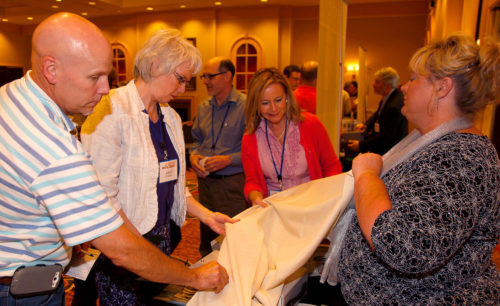
They won’t be benchmarking themselves against an anonymous number found online. They’ll be in a room with decades of window treatment business experience and owners dealing with the same kinds of sales, vendor, employee, operational and financial decisions.
That’s the real value of the room.
You still have to do the work. You still have to look at your numbers honestly. And when the Conference ends, you still have to make the decisions and execute them.
You just don’t have to figure it all out alone.
The CEO Conference is exclusively for Exciting Windows members. If you’re considering membership and want to join us in Kansas City this October, now is the time to explore Exciting Windows. Members will receive a pre-conference workbook to prepare for the discussions and arrive ready to make productive use of their time together.
A better business doesn’t come from having access to every answer. It comes from knowing your numbers, asking better questions, making thoughtful decisions, and having the right people around you when those decisions matter most.
When you join Exciting Windows, you’ll transform a world of competitors into a community of collaborators. Submit the form below for membership information.
Find your people. Reach your goals. Grow your business.
Our members are the top-performing window treatment professionals in the industry.
Join us and grow!
- Want to learn from those who have done it before you?
- Collaborate and share data?
- Learn methods that will save thousands of dollars and hours of lost time?
- Hit that next goal you’ve had in mind for months…or even years?
We’d love to hear about your business. Tell us how to reach you so we can chat.